Sequential Logic and Concurrency Logic
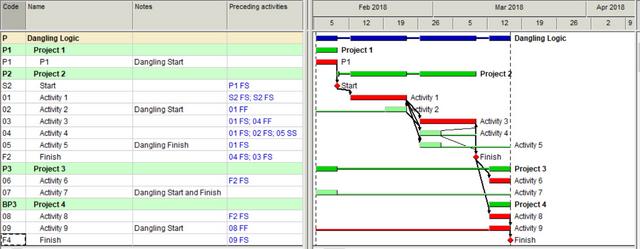
Unfortunately, all PERT charts contain a fatal flaw of logic. They imply that you must [ALWAYS] complete the preceding task before you start the succeeding one. This notion of precedence is dangerous in a fast-moving world. You see, PERT charts assume that nothing useful can be done in a succeeding step until all of the preceding step is complete. Thus, succeeding activities don't start until everything required to complete them is available. Such logic unnecessarily places activities on the critical path, which is exactly the opposite of what we need for rapid development. Instead, we must begin the succeeding activity as soon as we have the minimum information required to begin it.
PERT charts inherently result in longer development schedules, because they incorrectly use sequential logic. Not starting downstream activities until the upstream ones are complete inexorably lengthens the critical path. Instead, we must use the logic of concurrency to shorten the critical path.
Sequential Logic as well as Concurrency Logic does happen, use them as need be.
Be reminded that when using Concurrency Logic there might be LAG DRAG. This happens when increasing the duration of a task accelerates the start of a successor task. To identify such occurrence use DRAG float values to identify if it happens on critical activities, use Start FLEX to identify whenever it can happen in non-critical activities.
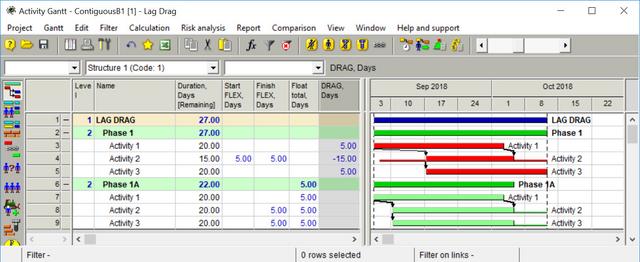
Then you have to decide if DRAG activity duration might be increased or if activity shall split. Usually it is better to keep current activity duration when not critical, when critical it can be otherwise.
When increasing/decreasing activity duration you must always consider the impact of this action on resource leveling. You might decide to increase/decrease resource quantity, you might decide to increase/decrease partial workloads, you might decide to increase/decrease lag values, you might decide to change lag type [duration lag/volume lag], you might decide to change lag calendar, and you might decide to increase/decrease resource production rate or maybe a combination of these and any other strategies. What is important is that you keep control and that it is transparent.