Agree with Mike Testro, there must be at least 1 predecessor and 1 successor for every task except the start and finish milestones. But this is not always good enough to prevent dangling logic. Perhaps it should read at least one predecessor link to activity start node and at least one successor link from activity finish node.
Most modern scheduling software implements a variation of CPM scheduling called the Precedence Diagramming Method (PDM). In addition to the “Finish-to-Start” relationship of basic CPM scheduling, PDM allows “Start-to-Start,” “Finish-to-Finish,” and “Start-to-Finish” relationships, all with or without lags. While PDM software allows more realistic and more efficient modeling of real-world project schedules, it is possible for activities to have both predecessors and successors yet still suffer from dangling – hence inadequate – schedule logic. These cases – generally categorized as dangling finish and dangling start – are also known as “orphan relationships.”
Dangling Logic
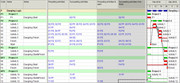
When using point to point relationships the arbitrary rules regarding ratio of links to activity count become meaningless.
Microsoft Word - Links_Lags_Ladders (mosaicprojects.com.au)
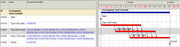 Click the thumbnail and zoom for a larger view.
 Note point to point relationships were defined using volume lags. Be reminded that unlike Time lags Volume lags are statused whenever predecessor activity volumes progress.
It can be argued by using point to point relationships in occasions logic is improved and the more the point to point relationships the better. These rules shall be used as a warning but not as a firm statement that logic is wrong.
Getting the basic link reports as well as the link table is easy, not so when interested in more complex statistics where you might need to export the links table to a worksheet or database file in order to make complex queries. Still the devil is on the details and no such arbitrary rules will substitute a thorough review of the schedule logic.
Best Regards, Rafael
