
Non cumulative Material Leveling
- Created
- 62
- 8
Hi my friends,
I would like to discuss some cases that I faced today. I'm leveling material from Spider but, I think that algorithm always considers that if you do not use the material in each period the same material goes to another period for use. The cumulative concept that's right for materials like bricks, gravel, cement and others but, for leveling composite materials like concrete and asphalt, that do not consider stock in real life the way is different. Spider have some key for not considering this? According picture bellow the leveling works very well because Spider consider that quantity not consumed (8units) in 11/30/21 will be cumulate and will consumed 12/01/21 together other, even resource Truck do not capacity (992units consumed) faced (1000units income (produced)). In systems where the material is produced and this product must be 100% used the stock concept is right? Have some way to consider this situation?
Follow file link,
https://we.tl/t-cK8c6F8ewd
Best Regards,
Daniel Morais
62 replies
Oldest first- 0VLVladimir Liberzon ·
Hi Daniel,this task is not
Hi Daniel,
this task is not trivial and today Spider Project does not model this case.
It is necessary to adjust material production to consumption if maximal consumption is less that maximal production capacity and adjust the number and workloads of assigned resources if maximal consumption exceeds the production capacity.
We will think about the best way to model this task but today this can be done only manually.
- 0DMDaniel Morais ·
Ok Mr. Liberzon, thank you
Ok Mr. Liberzon, thank you for answer. I think this is important feature because for example Eolic Farms (concrete trucks) and Roads (dump trucks) the material leveling is excellent way for balacing the best quantity of resources according the material production (consumption). The Spider algorithm can be an excellent support for the best decisions where many times this resources can be expensive if bad dimensioning.
Best Regards,
Daniel Morais
- 0
Marcus Possi ·
Hi Daniel and Vladimir, I
Hi Daniel and Vladimir,
I made a short video, trying to understand what you presented as an obstacle. here
Imagining some a limited supplier (asphalt) and limited resource quantity (trunk), considering the SPRJ sent, I made some simulations.
I considered a regular common calendar 7 days a week, 10 hours, and a limit of 100tons asphalt production, 3 road construction activities consuming asphalt according to its length.
Take into consideration that an activity will only begin if there will be enough material to support it.
Please take a look and inform any mistake / misunderstood in the model I made. by CPM calculation ...
I recorded it in Portuguese :)
by CPM calculation ...
by Resource Leveling + LSM
file SPRJ is here: https://www.dropbox.com/s/m1nkhu3b3ttwtui/Trucks_Asphalt.001.sprj?dl=0
- 0DMDaniel Morais ·
Hi Marcus,The concempt
Hi Marcus,
The concempt applied is wrong because the sum of 3 bar bellow (activities) must be exactly the same time to bar above (production) because everything that is produced must be consumed, remember this material don't consider stock.
You Second schedule show that happen cumulative stock of material for after be consumed, don't can this way, everything produced on day must be consumed on the same day, if happen some sold, the must be considered how lost.
Best Regards,
Daniel
- 0BLBogdan Leonte ·
Hello Daniel,I read all the
Hello Daniel,
I read all the posts and I have a couple of questions, regarding the purpose of the model related to material leveling?
Here are some scenarios I though after reading the posts:
A. You want to adjust the prodction of the asphalt usine in order to produce less than the maximum capacity?
B. You want to be able to increase number of trucks in order to lay all the asphalt produced considering the maximum capacity of the usine?
C. You want to leave the model as it is but calculate the monetary loss for each day based on asphalt that has not been layed?
Best regards,
Bogdan
- 0DMDaniel Morais ·
Hi Bogdan,Follow my
Hi Bogdan,
Follow my answers:
A. No, the production of asphalt usine are according with the real cenario in construction, 100ton/h into of calendar real. This production don't need be increase or decrease it's already adjusted.
B. Not only increase but decrease too, depending on the production. Should be interesting if we could calculate the quantity of trucks, (according with the produtivity, workload and volume sets) for use all asphalt produced.
C. This would not be the main idea and desire, but I understand that it would be a consequence of after all the leveling calculations.Best regards,
Best Regards,
Daniel
- 0RDRafael Davila ·
As asphalt is consumed as
As asphalt is consumed as soon as it is produced it is not a constrained as a consumable resource. The constraint is on the production rate ant it can be modeled as a renewable resource whose available quantity is the maximum production rate.
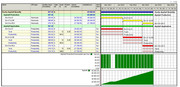 click on thumbnail.
To get more granularities with the production rate I am multiplying the quantity for resource "rate" by 100.
https://www.mediafire.com/file/vs66ht2k26vklkw/Trucks_Asphalt03.001.sprj/file
- 0DMDaniel Morais ·
Hi Rafael,This is true, but I
Hi Rafael,
This is true, but I would like to test and guarantee that the material produced is well consumed according trucks dimensioned. If Spider can calculate too the quantity of trucks will be amazing (considering that material like asphalt and concrete are not stockable).
I'm not sure if the modelate how hammock and MH (Man Hour) resource if will won't lost the condition IN/OUT = zero (ideal condition), I think that with material is more sense. Because this way the flow would be "Consume to production" or activity type "productivity" to activity type "hammock" when the correct flow shoud be "Production to Consume".
Best Regards,
Daniel
- 0RDRafael Davila ·
With some cell specific
With some cell specific formulas and a script Spider can adjust the production resource quantity (#trucks x truck_productivity x 100) and instead of fixing the number of trucks you migh use variable quantities for Spider to figure it out.

12x8.26x100=9912
I usually find it easier and a better fit to use multi-resources and skills with no need for complicated formulas, just use a few crews with increments in size.
- 0BLBogdan Leonte ·
Daniel,what Rafael is
Daniel,
what Rafael is proposing is very good.
I looked over your model and I have a very simple question: Why does the asphalt usine have more work hours/day than the trucks? Also why does the start of work day of the truck = the start of the asphalt usine?
I don't know the exact process but if the asphalt usine works 2 hours/day than the truck what happens to the asphalt that is produced after the truck day ends? Even if there are some technological times to start/stop the asphalt usine these should not be included in the schedule because Spider will consider them production times for the asphalt.
It would make more scence to have the asphalt usine work more than the trucks but the start day of the truck would have to start afther the asphalt usine.
Best regards,
Bogdan
- 0DMDaniel Morais ·
Hi Bogdan,"I looked over your
Hi Bogdan,
"I looked over your model and I have a very simple question: Why does the asphalt usine have more work hours/day than the trucks? Also why does the start of work day of the truck = the start of the asphalt usine?" Yes you're right i will check and fix it. I tried input the conditin of real life but i do a mistake of a concept and do not saw this detail, thanks.
"I don't know the exact process but if the asphalt usine works 2 hours/day than the truck what happens to the asphalt that is produced after the truck day ends? Even if there are some technological times to start/stop the asphalt usine these should not be included in the schedule because Spider will consider them production times for the asphalt." Yes, you're right.
It would make more scence to have the asphalt usine work more than the trucks but the start day of the truck would have to start afther the asphalt usine. Yes, you're right i will fix it, thanks.
Best Regards,
Daniel
- 0BLBogdan Leonte ·
Daniel,1. There is also
Daniel,
1. There is also another problem with the model, material leveling and resource leveling do not interact. Spider levels materials and levels resources but it does not level one depending on another. There is a function called Variable Workload and Number, using this Spider decreases/increases from minimum to maximum resource number and workload however this is taken into account only for resource leveling.
2. Since you have a workweek with different number of whours per day (see Saturday) you cannot adjust the number and workload for each day (manually) all you can do is calculate an average. Also if the consumption of asphalt is greater than the production then Spider will delay the activity wich consumes the material until there is enough.
3. In order to get an optimal solution for your model Spider would have to adjust number of resources and workload (especially workload) in order to get Consumption=Production (Income).
4. Also when using Variable Workload and Number you would have to manually (or formula) increase the number of resources in order to get a Consumption higher than Production (Income) and only after this Spider would reduce workload to mach the Consumption to the Income.
Numbers 3 and 4 cannot be done in Spider as it is now. Try using what Rafael suggested.
Best regards,
Bogdan
- 0DMDaniel Morais ·
Hi Bogdan,1. This is true,
Hi Bogdan,
1. This is true, leveling material and resource do not interact. I would use the function Variable Workload and Number but i can't adjust for Spider decreases/increases resource number (quantity) if you have some ideia please can you give me?
2. I'll input the average.
3. ok
4. ok.
Since Spider can't do 3 and 4, the best solution until now is from Rafael.
Thank you
Best Regards,
Daniel
- 0BLBogdan Leonte ·
Daniel,1. Partial workload
Daniel,
1. Partial workload and quantity works only for resource leveling. Here is a youtube link with a quick example:
https://youtu.be/39DD9iRhh-g
2. Regarding formula, I would do the following:
Number = if (Code = 'B', if ( Prod * Number * MeanWorkDay [ Code , ?Code , Calendar ] <1000, Number+1, if ( Prod * (Number-1) * MeanWorkDay [ Code , ?Code , Calendar ] <1000, Number, Number-1)), '')
Some explanations:
If ( Code = 'B' ...) - Code of the resource Truck
MeanWorkDay [ Code , ?Code , Calendar ] - This is a modifier, basically it gets the average workhour/day from the Calendar table so you do not have to get change the value in the formula
1000 - is the quantity of asphalt/day (10 hours x 100 tones/hour). I could have created another modifier and if (Code = 'A'...) but I did not want to complicate the formula to much
if ( Prod * (Number-1) * MeanWorkDay [ Code , ?Code , Calendar ] <1000, Number ... - This avoids cycling calculations. It checks if by subtracting 1 from the resource number you get a volume of asphalt/day less than 1000.
The formula reads as follows:
For every resource that is Truck check if Productivity x Number of Resource Assigned x MeanWorkday Hours is less than 1000 tones it incremets the number of resources of that assignment by 1. Then it it checks that by subtracting 1 unit resource the number of tones of layed ashpalt/day will not go below 1000. If the second check is below 1000 then it does not decrement the number, else it decrements by 1.
Again the formula can be modified to get you the exact value of resources to get more than 1000 or not to go below 1000 but I think some iterations and rescheduling may be better for the user to see what is going on with each iteration.
Hope this helps.
Best regards,
Bogdan
- 0RDRafael Davila ·
Daniel the number
Daniel the number 12x8.26x100=9912 is equal to the crew production rate 12 resources x 8.26 productivity of one resource = 99.12 but because quantity must be a whole number I multiply it by 100 to get 9912 which gives me more granularity as the last 2 digits are not truncated, also resource availability is adjusted multipling by 100.
- 0
Hi Daniel and folks. The
Hi Daniel and folks.
The concempt applied ... after talking directly ith you, I think I definitely understood the problem. There are some not stock material, like asphalt or concrete in use, so it is not possible to store such material before starting activity.
The sum of 3 bars (activities) must be exactly the same production bar above (production), and it must be a continuous work, in order to avoid losing time or keeping rotten storages. Everything that is produced must be consumed.
After taking some time simulating and testing modules, with and because Paulo Cabral, I think we were able to solve with just one button press, schedule resource calculation, without formulas or Scripps.
We are testing a solution with teams and with skills. We are only waiting some help from developers to complete the idea.
Only spider project can provide search elegance and simple answers.
Please give us a couple of days. ;)
- 0DMDaniel Morais ·
Hi Bogdan,Thanks for the
Hi Bogdan,
Thanks for the formula, but don't work very well for one detail, on formula we need to consider too the resource Asphalt Usine because she always must be 1 unit. When load the formula the quantity of the Usine is change too, observe bellow. I changed the concept divinding in it into smaller sections, but i think that the calculus is the same.
Look bellow, how do not uses Resource Usine Spider consider that activities 4 and 13 works together is this not be happen, if i just put 1 resource on activitie's phase Asphalt Production the calculus increase this quantity I don't no why.
https://we.tl/t-Fd1fsG90I7
Best Regards and again thanks for your help,
Daniel
- 0BLBogdan Leonte ·
Daniel,when I made the
Daniel,
when I made the formula the code for the calendar of the trucks and the code of the trucks were both B. When I tested it it worked properly becase of this coincedence. Here is the corrected formula that takes into account any situation:
Number = if (Code = 'B', if ( Prod * Number * MeanWorkDay [ Code , ?Calen , Calendar ] <1000, Number+1, if ( Prod * (Number-1) * MeanWorkDay [ Code , ?Calen , Calendar ] <1000, Number, Number-1)), Number)
Best regards,
Bogdan
- 0DMDaniel Morais ·
Hi Bogdan, It works very well
Hi Bogdan,
It works very well now, but one observation, if I will start with 1 resource on each activity with truck, the calculus stop before the maximum ideal and after this, I must to leveling again and again until he finds the ideal model with productivity 100ton/h, the concept of the formula is this?
Best Regards,
Daniel Morais
- 0BLBogdan Leonte ·
Daniel,the formula is ment to
Daniel,
the formula is ment to fine tune the resource allocation, not calculate them.
You can use another formula to get with aproximation the number of resouces:
Number = if (Code = 'B', RoundTo(100/Prod+0.5, 0), Number)
So first us:
Number = if (Code = 'B', RoundTo(100/Prod+0.5, 0), Number)
Reschedule
then use:
Number = if (Code = 'B', if ( Prod * Number * MeanWorkDay [ Code , ?Calen , Calendar ] <1000, Number+1, if ( Prod * (Number-1) * MeanWorkDay [ Code , ?Calen , Calendar ] <1000, Number, Number-1)), Number)
Reschedule and repeat the second formula if necessray.
Best regards,
Bogdan
- 0RDRafael Davila ·
The following model does not
- The following model does not use complicated formulas and while "productivity resource" quantity is calculated manually the software selects the best crew size among the difined multi-resource skills.
- The activities are not linked one to another.
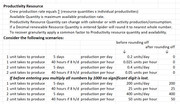
- "productivity resource" quantity is a function of the selected quantity therefore partial workload models can be problematic.
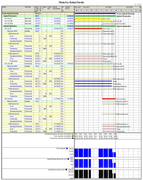
https://www.mediafire.com/file/jcqwwwrgnuno1mu/Trucks_Asphalt03.002.sprj/file
about Productivity Resource Quantity
- 0RDRafael Davila ·
Leveling the Prodution
Leveling the Prodution Capacity as a Spatial Resource is another way.
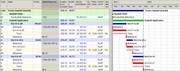 the asphalt application activities are not linked among each other.
https://www.mediafire.com/file/2kt1ou2zt87zsku/Trucks_Asphalt04.001.sprj/file
 <== if we increase the production capacity enough say to 200 then 2 of the activities can be scheduled at the same time.
Because "materials"/"consumable resources" can be set to be fractional in this model we have no issue with loss of granularity.
- 0DMDaniel Morais ·
Thank you Rafael,The solution
Thank you Rafael,
The solution works like your first approach by hammock but, I think how conceptual question would be better if we could modeling like real life, material producing by one activity and be consumming by others activities all leveling by materials restrictions with improve with concepts "material not stockable" like Vladimir said, "It is necessary to adjust material production to consumption if maximal consumption is less that maximal production capacity and adjust the number and workloads of assigned resources if maximal consumption exceeds the production capacity", where reads "adjust the number and workloads of assigned resources if maximal consumption exceeds the production capacity" I would include "automatically" until finds the better condition, because in this case (asphalt, concrete and others like this) must be considered how "non stockable material", in other words, the difference between produced material and consumed material is lost, he can be calculated for the scheduler know how much is your lost but shouldn't go to next period, because the material is perishable.
Best Regards,
Daniel Morais
- 0
PART 1 / 2 – not stock
PART 1 / 2 – not stock material – asphalt & concrete & tomatoes - pdf here
Rafael Davila, Bogdan Leonte, Vladimir Liberzon, and Daniel Morais
According to Mr Liberzon this task is not trivial and today Spider Project does not model this case, yet.
“It is necessary to adjust material production to consumption if maximal consumption is less that maximal production capacity and adjust the number and workloads of assigned resources if maximal consumption exceeds the production capacity.”
Spider Project has more than 4 methods of assignments opportunities: direct assignment, Teams, Multi-resources, skills, and their mixings, so we tried a lot, and the best natural results will be described here – as far as we (Paulo Cabral and myself), could reach it.
Here are our assumptions:
- The asphalt production and consumption are under the same calendar to make it easy to understand;
- The asphalt production is a “contract” with a fixed duration – greater than the “calculated longest path” spam;
- We have not sequenced in rigid way (modern CPM vicious) – instead, we let the activities free allow spider to decide what is the best result obeying the priority applied (old CPM + A.I., we call liquid scheduling);
- We called asphalt or concrete, or even tomatoes, as not stock materials /perishable materials;
- We made a graphic to analysis the asphalt losses – we cannot use “stocked asphalt;”
- We started using all trucks – 30 units
watch the video to understand how we did it.
The losses of materials (asphalt not used and storage at supplier) are related to the number of trucks used in each activity.
The pic above has:
1 – 1000 tons/day – 100 tons/h in Asphalt plant
2 – asphalt balance – asphalt plant production x asphalt consumption
3 – first activity (highest priority) waits the necessary amount to start and finish its job
4 – second activity waits the necessary amount to start and finish its job
5 – third activity (lowest priority) waits the necessary amount to start and finish its job
6 – asphalt plant time to produce first volumes
Adjusting trucks from 30 to 18 – manually we got:
watch the video to understand how we did it.
1 – the maximum calculated asphalt losses
2 - no spam between activities – the shortest duration
Note: why 18 trucks?
- 100 tons/h in asphalt plant with each truck with 5.4 tons/h ~ 18.5 units
- More than 18 trucks wont suit plant capacity – less than 18, parallel paths will be set to optimize asphalt balance working with rotten asphalt (STOCKED ASLPHAT)
- The operator – spider operator, must change trucks units by himself.
- In this specific case the asphalt losses are on 2750 tons, what seems to be ~3% - refer to pic below
- 0
PART 2 / 2 – stockable
PART 2 / 2 – stockable materials – sand & water & orange_juice - pdf here
Rafael Davila, Bogdan Leonte, Vladimir Liberzon, and Daniel Morais
Thanks to Spider Project algorithms and engines … it is easy to Spider Project model and take care of it since I was young.
“It is necessary to adjust material consumption to make ends meet with the stock, otherwise there will be a fake schedule.”
Spider Project has a specific productivity type, that when modelled with skills, under the CPM added to Liquid Scheduling or - A.I., made passible to Paulo Cabral and I produce the following compliment:
Here are our assumptions:
ü The asphalt production and consumption are under the same calendar to make it easy to understand;
ü The asphalt production is a “contract” with a fixed duration – greater than the “calculated longest path” spam;
ü We have not sequenced in rigid way (modern vicious CPM) – instead, we let the activities free allow spider to decide what is the best result obeying the priority applied (old CPM + A.I., we call liquid scheduling);
ü We considered asphalt as sand or water, or even orange_juice, as stockable materials / not perishable materials;
ü We did not assign the maximum number of trucks – 22 in a Team; but 22 different Teams, with a 100% workload “truck” skill resource type. The skill truck has 22 different trucks;
ü We made a graphic to analyse the sand/water/orange_juice losses – we cannot use “stocked asphalt;”
ü We started using all trucks – 22 units
watch the video to understand how we did it.
The losses of materials (“asphalt” not used and stocked at supplier) are related to the number of trucks used in each activity.
The pic above has:
1 – intersection – yes, it is possible and profitable to make two activities at the same time
2 – number of trucks used simultaneously;
3 – asphalt balance – asphalt plant production x asphalt consumption
4 - 1000 tons/day – 100 tons/h in Asphalt plant
5 – “asphalt” consumed every day;
6 – first, second, and third activity (from the highest to the lowest priority) running according to the amount of produced material;
7 – the over quantity material produced but not used for the former activity, is passed to the next activity in advance, with the possible quantity available;
Although we applied all the trucks – 22, the algorithm decided for 18 trucks.
Note: why 18 trucks?
(1) 100 tons/h in asphalt plant with each truck with 5.4 tons/h ~ 18.5 units;
(2) More than 18 trucks wont suit plant capacity.
Adjusting manually the maximum trucks quantity from 22 to 18 – manually we got:
A dim increasing in material losses. … 1158/1013
Adjusting manually the maximum trucks quantity from 22 to 8 – manually we got:
An increasing in material losses. … 5249/1029
And an increasing in project time from 6/03/2022 to 16/03/2022
Let Spider Project does the arduous work for you.
watch the video to understand how we did it.
- 0RDRafael Davila ·
In my experience sizing the
In my experience sizing the construction crew is rarely a continuous function but a step function. Usually increasing crew size means different equipment. The production rate is not always linear with the crew size. The asphalt placing is no exception; similar to earthwork the operation must be balanced.
Planning the asphalt paving and compaction process
Planning for earthwork operations is somewhat similar.
In practice we usually have several crew options, each with a different composition and different production rates but with the skill to perform the same work. Sometimes the crew selection goes to a specific crew; sometimes several crew options can be considered as multi-resources sharing the same skill. The use of multi-resources and skills is useful when you have several crew options and want to keep the options open; as the schedule moves the crew selection might be different to accommodate for re-distribution of resources.
- 0RDRafael Davila ·
Daniel,... if we could
Daniel,
... if we could modeling like real life, material producing by one activity and be consumming by others activities all leveling by materials restrictions
The issue is with the need for reliable strict links, so unreliable I never use them; they might hold at initial run but a delay to successor may create problems.

https://www.mediafire.com/file/95z3nlo8zuzpg8k/Trucks_Asphalt.060.sprj/file
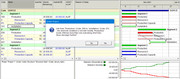
https://www.mediafire.com/file/pvt8ozjm66fkuhl/Trucks_Asphalt.061.sprj/file
Best Regards, Rafael
- 0DMDaniel Morais ·
Hi Rafael,But in real life,
Hi Rafael,
But in real life, with materials don't stockable (this is our issue), this situation never will happen, I mean, the consumption in different days with production, so i understand that this restriction on activity 201 don't happen no?
Best Regards,
Daniel
- 0RDRafael Davila ·
Exactly, this is the point.
Exactly, this is the point. There are many reasons an activity might be delayed, in this model it was a date constraint the easiest way to force the delay. But it might be resource leveling or a delay in a predecessor, a delay that at initial schedule does not happens but as the schedule moves will happen.
Using strict links is error prone and unreliable. If strict links were so reliable everyone would be into it but no one suggested their use, everyone knows strict links are unreliable. Even Spider Project knows and the best t can do is to issue a warning when it happens.
Strict links happen when minimal lag constraint equals maximal lag constraint; maximal lag is a functionality not available in current scheduling software.
Sixty years of project planning: history and future
- 2.3.1 Maximal relations: Maximal relations were included in the original MPM; however, they were not adopted into the widespread commercial software used by the majority of planning professionals.
- 0AKAlexandros Kroustis ·
Greetings to all, I have
Greetings to all,
I have three questions:
1. Do we know the maximum Asphalt capacity of the trucks?
2. This capacity equals with 100% placement?
3. We don't care at all at the number of trucks, that is, they are much cheaper than asphalt production, or we want also to check what is more profitable, less trucks with some loss of asphalt or more trucks with no loss of asphalt?
For No 3 we also want prices for each element
Kind Regards,
Alexandros Kroustis
- 0DMDaniel Morais ·
Hi Alexandros, 1. Yes,
Hi Alexandros,
1. Yes, 25ton;
2. Yes, everything that is transported by the trucks is used;
3. Of course that asphalt plant is too expensive and plus important that the trucks but, the ideia is to balance production with transportation for find the better number of trucks according day production.
3.1. You can apply US$ 15/hour by truck.
Best Regards,
Daniel Morais
- 0RDRafael Davila ·
At home if transportation of
At home if transportation of materials is on public road it must be done by independent truckers and the tariff is fixed per ton and travel distance. I do not recall a single job where the plant was within the project and delivery did not required use of public roads. I do not believe any local asphalt plant own trucks. Therefore asphalt placing contractors have several cost components; among others, the cost per ton of material at the plant, the cost of delivery and the cost of placing and compaction at the jobsite. General contractors are mostly interested in their cost as fixed by the asphalt placing agreement.

In the case you must have the asphalt plant at the jobsite because it is on a remote location, then you shall balance production with transportation and placement to get your target production rate.
As asphalt is consumed as soon as it is produced it is not a constrained as a consumable resource. This resource is set as non-leveling. The constraint is on the production rate and it can be modeled as a renewable resource whose available quantity is the maximum production rate. Please take a look at my prior posting of Wed, 2021-12-01 12:53.
Be reminded that idle resources such as the asphalt plant do have a cost you can consider within your model. The use of the CPM model as a cost tool can be a complicated task but can be done if need be.
- 0AKAlexandros Kroustis ·
Hi Daniel,I will continue the
Hi Daniel,
I will continue the work of Rafael.
What better describes "Asphalt Production" with material lost if not used is Resource with idle time as material not used.
Also in order Spider to calculate automatically number of trucks we need again a resource. Material levelling in Spider does not work with variable quantity & workload of resources.
I created a Resource "Asphalt Consumption" with qty of Asphalt in Kilos, same discipline as with Rafael's.
Considering you answer 25 Tons per truck you should answer directly 4 trucks with no loss at all without the need of any software.
Unfortunately the links are dead for your project, but from the image shown I take as consideration that we have a calendar of 10 working hours per day, 100 Tons / hour, with total 1000 Tons Daily. Usable 992 Tons, or 4 trucks with 24.8 Tons each.
I created 2 scenarios:
- You use 25 Tons capacity trucks, but you fill them with 24.8 Tons. This is as_plant_01.sprj
- You use 25 Tons capacity trucks, you fill them with 25 Tons, but 24.8 are usable for the site. This is as_plant_02.sprj
On both scenarios I used Variable quantities. With variable quantities we fill only the data for 1 truck and let Spider do the calculations.
On the first scenario the meaning is that the lost quantity remains to the asphalt plant.
This is shown as lost asphalt quantity, hammock filling with the idle time (lost material) of "Asphalt Consumption" Resource.

Here we match productivity of trucks (24.8) with Asphalt Consumption (24800).
On the second scenario, "Asphalt Consumption" is 25000, but productivity is 24.8.

Here all asphalt leaves from the plant (25Tons) but the final available material is 24.8, the amount to be deducted from roadworks. Here we don't have lost quantity but we see that in order to install 95000 Tons we need to produce 95766.
Now, on both scenarios we identify that Spider uses all available trucks on one activity only. I have tried to put strict links but again Spider ignores them.
If Vladimir can help here it would be nice.
What you can do if you want to start both activities together, after identifying the number of trucks, you can go and change the number of trucks accordingly in your activities less than the identified number (4) and have your desired output as below:
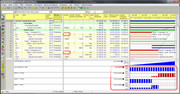
I have also used material "Asphalt Production" that is consumed with Resource "Asphalt Consumption"
Tell me if this helps.
Link To Files:
Kind Regards,
Alexandros
- 0RDRafael Davila ·
1 to 10 trucks at 25
- 1 to 10 trucks at 25 tons/hr/truck yields 25 tons/hr to 250 ton/hr. It does not make sense to use the same placement crew (labor and equipment) to place at a rate of 1 truck vs. 10 trucks, the same go with intermediate number of trucks.
- While it is true porduction rate increases with truck quantity more frequently than not it is not linear. There might be economies of scale or perhaps diseconomies of scale. At some point more trucks will not increase production rate unless you change the composition of the crew as a whole.
- I always like to see the whole crew; in this case it would be labor, asphalt plant and placing equipment. With very few exceptions I like to place production rates at the crew level instead of at some individual resource(s). With this approach you would be considering the production rate of all the resources working as a team.
The operation as a whole must be analyzed, all equipment shall be considered. In the following example the rate of the operation was determined by the rate of the roller.
https://engineering.purdue.edu/CEM/people/Personal/Halpin/Sim/Examples/pave.htm
Conclusion: The rate of the operation was determined by the rate of the roller. This was because the roller took 15 minutes to compact the surface of the asphalt. Thus, to improve the productivity, more roller should be added into the operation. Nevertheless, the company chose to use only one roller. Perhaps, the decision to only have one roller was determined by cost factor. The productivity obtained from the MicroCYCLONE model was within the expected productivity by the company.
- With the use of multi-resource skills you can create a model that will consider different crews and their production rates.
https://www.mediafire.com/file/6yvjpe2e58yf1s1/Trucks_Asphalt.200.sprj/file

- 0AKAlexandros Kroustis ·
Dear Rafael,We need to stick
Dear Rafael,
We need to stick to the main query:
If Spider can calculate automatically the number of required trucks, and if we can show the lost material and not re-use it.
Nobody asked about asphalt laying, it's productivity and required crew composition for it.
If I was to give you an asphalt plant with 5,000,000 Tons/ hour production and that it has to deliver to 25 different contructors & sites you would sit again and try to do manual calculations?
That's why there is variable quantity.
The maximum 10 was in purpose something big to show that Spider makes the correct calculations.
And for the specific multi-resource, no matter how many, it will be the same: 24.8 Tons/Truck / hour delivered to the site.
We don't care here what happens to the site.
Regards,
Alexandros
- 0RDRafael Davila ·
We don't care here what
- We don't care here what happens to the site. Really!
Calculating the number of trucks required will depend on what happens at the construction site. Production rates of asphalt pavement crews are not linear to a single resource, it is not that simple. Spider functionality for variable quantity works as expected but should be used only in the few cases production rate is linear with resource/multi-resource quantity. It is not to be abused. Use Skills and multi-resources instead of variable quantity when team production rates are not lineal to quantity.
The sample schedule files provided by Daniel Morais is not a Portfolio of jobs but a single job, a single plant supplying asphalt to the same job to different road segments. It is all about what happens at the jobsite. Even if each segment were a different portfolio job the demand would be determined by the resource capacity at each jobsite. It is not like the plant will send to the different jobs whatever rate is to plant convenience no matter what happens at each jobsite.
All 25 projects with a truck cycle time of exactly 1 hour is difficult to believe. If the truck cycle time = load + travel loaded + unload + return empty = 10m + 20m + 10m + 20m = 60m = 1hr. Then truck production rate = 25 ton/truck ÷ 1 hr. = 25 ton/truck/hr. If the travel distance increases then travel time increases, say travel time each way is 30m then we have Truck cycle time = load + travel loaded + unload + return empty = 10m + 30m + 10m + 30m = 80m = 1.33hr. Then truck production rate = 25 ton/truck ÷ 1.33 hr. = 18.79 ton/truck/hr.
By the way, an asphalt plant with a capacity of 5,000,000 Tons/hour would be the equivalent to 12,500 plants each with a capacity of 400 Tons/hour. That is huge!
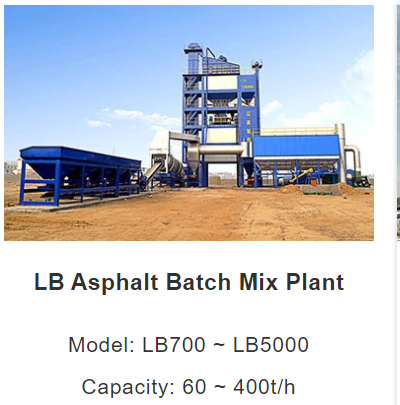 X 12,500
- 0DMDaniel Morais ·
Hi Rafael and Alexandros,When
Hi Rafael and Alexandros,
When I modeled this schedule my intention was that Spider models the best quantity of the trucks for the assumptions gives, and, what assumptions that I had:
- We are working on the project of tha Subsaarian Africa's, country called Benin;
- Our Asphalt plant was assemble only for attending our project, 140km asphalt road with two layers;
- We have 3 different stretches 1 for South-North, 2 South-Northwest and 3 East-West;
- The asphalt plant works with the average of 100 ton/h, this is number for schedule;
- The asphalt finisher have the capacity of 700ton/h, so, our dimensioning for the field productivity must to be, by the bottleneck of the production, the lowest production, asphalt plant;
- Then, I have the asphalt production and asphalt consumption, then I will need calculate the best mix (quantity) of the trucks quantity for supply the finisher using temporary accesses;
- Like below, each part of the road that need asphalt was divided on 10 to 10km, 10 to 20, 20 to 30 and go away...
- The difference between each part is the semi-distance, for calculate the productivity, below.
- After productivity calculated, we can finally calculate the main aim of the model, quantity of the trucks. This is a question!!!
How Spider Project is unique tool that model restrictions of the materials, we could easier calculate the quantity of the trucks but, for the type of materials (non stockble), today, this is impossible, because for material, Spider automaticaly consider that the material unused today, will be used tomorrow and materials like (asphalt and concrete) this not be this way.
- The best model that I can make, was by help of Rafael Davila, one mix of activities and hammock, that I found quantity of the trucks by tentative and error, for aims the limit of the asphalt plant 100ton/h, that this case was 99ton/h...
file by link...
Kind Regards
Daniel
- 0RDRafael Davila ·
Assuming speed of truck is
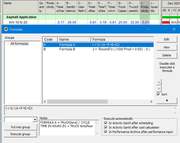
Assuming speed of truck is the average of the speeds in both travel directions, empty vs. loaded, your productivity formula looks ok, no need to use two speeds, I like your transparent approach. You used same speeds for all segments but your approach allows for it to be different for each travel segment if need be.
- 0DMDaniel Morais ·
Hi Alexandros,Exactly, 5,01
Hi Alexandros,
Exactly, 5,01 ton/hour, this is productivity measure. This productivity is calculated by many variables speed, distance, time to charge and descharge...
With this productivity i will need on this segment, of 19 trucks to carry on asphalt, if I put plus of 19 then i will exceed the asphalt plant capacity, if less of 19 trucks, i will be provocate idle time of trucks.
Best Regards,
Daniel
- 0RDRafael Davila ·
DanielPlease verify times to
Daniel
Please verify times to discharge, it looks like you are using minutes instead of decimal hours, let me know. You are using a formula to calculate this field that does not looks right. Discharge time should be a fraction of an hour, say 6 minutes = 0.10 hours.
Best Regards, Rafael
Log in or join to reply
ProjectControls.com is free to join. Members can post questions, reply, vote and follow discussions.
Existing members: your original username and password still work. Forgot password?